

Quick Answer:
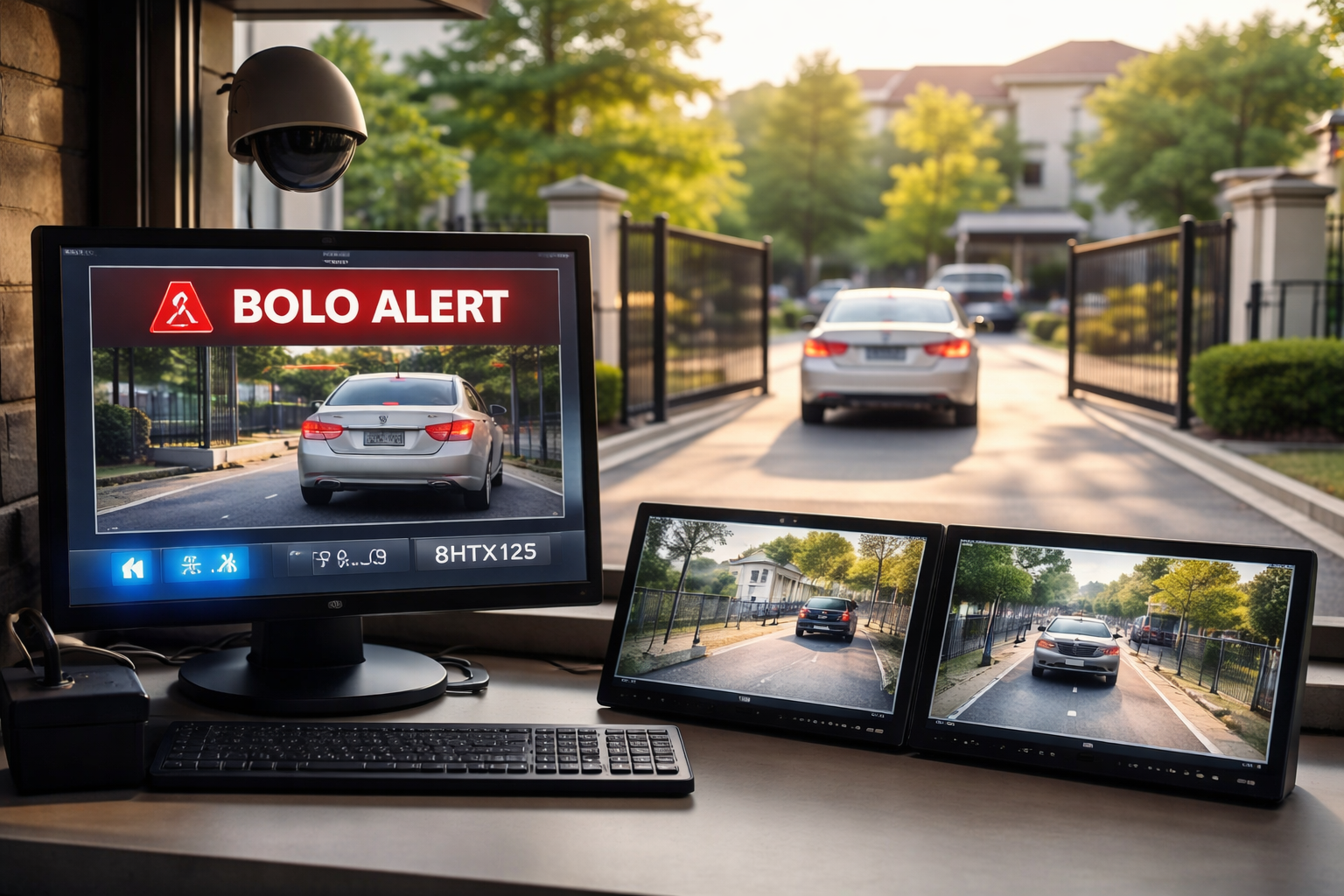
A BOLO notification system for HOAs is a security alert system that notifies property managers or security staff in real time when a flagged vehicle or individual enters or moves within a community. Most systems use license plate recognition, access control data, or visitor management logs to trigger these alerts automatically.
HOAs use BOLO systems to improve enforcement consistency, respond faster to repeat violations, and reduce preventable security incidents.
The Real Problem HOAs Are Trying to Solve
If you’ve worked with an HOA long enough, you’ve probably seen this pattern.
A vehicle causes issues. Residents complain. Security makes a note. Maybe someone sends an email. Then nothing happens until the same vehicle shows up again.
By that point, it’s reactive. Not proactive.
The core issue is not lack of data. Most communities already collect gate logs, camera footage, and visitor records. The problem is that information sits there. It does not trigger action at the right time.
That’s where a BOLO notification system for HOAs changes the game. It turns passive records into active alerts.
What Is a BOLO Notification System for HOAs?
BOLO stands for “Be On the Lookout.”
In HOA security, a BOLO notification system is software that:
-
Flags a specific vehicle or individual
-
Monitors entrances or access points
-
Sends an alert when a match is detected
The detection usually happens through:
-
License plate recognition systems
-
Gate access control logs
-
Visitor management platforms
-
Community surveillance systems
Instead of relying on someone to remember a plate number or manually check a list, the system handles it automatically.
If the flagged vehicle returns, the right person is notified immediately.
That simple shift changes how enforcement works.
Why a BOLO Notification System Matters for HOAs
As communities grow, complexity increases.
More residents.
More guests.
More short-term rentals.
Fewer on-site staff.
Manual processes break under that pressure.
A BOLO notification system for HOAs creates operational leverage in a few key ways:
Faster Response
Alerts happen at the moment of entry, not hours later during a log review.
Consistent Enforcement
Rules apply the same way on every shift. No dependence on memory or verbal handoffs.
Better Documentation
Each alert creates a record. That matters for board meetings, insurance reviews, and legal protection.
Reduced Escalation
When issues are addressed early, they are less likely to escalate into resident disputes.
From a board perspective, this creates visibility. From a manager’s perspective, it reduces reactive workload.
What Makes a Strong BOLO Notification System?
Not all systems are equal. If you are evaluating options, here are the features that matter most.
Real-Time Alerting
If the alert is delayed, the value drops dramatically.
The system should notify staff instantly through:
-
Guardhouse dashboards
-
Mobile devices
-
Email or push notifications
Speed is the entire point.
Clean BOLO List Management
You need to easily:
-
Add a vehicle
-
Set time limits
-
Remove it once resolved
If the system makes this difficult, the list becomes bloated and less useful.
High-Accuracy License Plate Recognition
Most BOLO systems rely on LPR technology.
Look for:
-
High recognition accuracy
-
Performance in low light
-
Multi-angle camera support
False positives create frustration. Missed detections create liability.
Role-Based Alerts
Security guards do not need every administrative alert. Managers do not need every minor notification.
Smart systems route alerts to the appropriate role automatically.
Reporting and Audit Trails
A good BOLO notification system for HOAs should show:
-
When an alert was triggered
-
Who acknowledged it
-
What action was taken
This turns security from anecdotal to documented.
How It Works in Real HOA Scenarios
Let’s make this practical.
Scenario 1: Repeat Parking Violator
A vehicle repeatedly violates parking rules. Residents complain.
The plate is added to the BOLO system.
The next time the vehicle enters the community, security receives an alert at the gate and addresses the issue immediately.
No waiting. No manual lookup.
Scenario 2: Short-Term Rental Issues
A guest vehicle is tied to previous disturbances.
It is flagged.
If that vehicle attempts re-entry, the system alerts staff. The HOA can then enforce rental policies consistently without manual plate tracking.
This is especially helpful in communities balancing homeowners and short-term rentals.
Scenario 3: Tailgating or Access Abuse
In gated communities, tailgating is common.
If a vehicle is associated with repeated access violations, it can be flagged.
The next detection creates immediate awareness. That allows intervention before the pattern continues.
Common Mistakes Communities Make
I have seen a few recurring problems.
Letting the BOLO List Grow Unchecked
Old entries stay active forever.
That leads to alert fatigue. Staff begin ignoring notifications.
Regular review keeps the system credible.
Poor Integration With Other Systems
If your BOLO system is separate from access control, visitor management, or LPR data, it creates more work.
Security tools should talk to each other.
Over-Reliance on Manual Verification
Some communities still require multiple manual confirmation steps after an alert.
Automation should reduce friction, not add it.
How a BOLO Notification System Integrates With HOA Infrastructure
A BOLO notification system works best when connected to existing tools.
Common integrations include:
-
Gate access control systems
-
License plate recognition platforms
-
Visitor management software
-
Property management systems
When integrated properly, alerts are contextual.
Instead of seeing “plate detected,” staff see:
-
Who the vehicle belongs to
-
Past incidents
-
Access history
-
Associated property
That context is what makes alerts actionable.
Why This Matters Right Now
Communities are not getting simpler.
Vehicle volume is increasing. Short-term rental traffic is increasing. Expectations from residents are increasing.
At the same time, staffing budgets are not.
A BOLO notification system for HOAs allows communities to operate with more awareness without adding more personnel. It shifts security from reactive to proactive. It replaces memory-based enforcement with system-based enforcement.
And most importantly, it helps prevent repeat issues before they become bigger problems.
If your HOA already collects security data, the next logical step is asking whether that data is working for you in real time.
FREQUENTLY ASKED QUESTIONS
What does BOLO mean in HOA security?
Are BOLO systems only for gated communities?
Does a BOLO system replace security guards?
How does a BOLO notification system work?
Can BOLO alerts be temporary?
Is license plate recognition required?
Get in Touch
Interested In Learning how BOLO Notifications Can Enahance Your Property Security?
Schedule a Demo Now!