

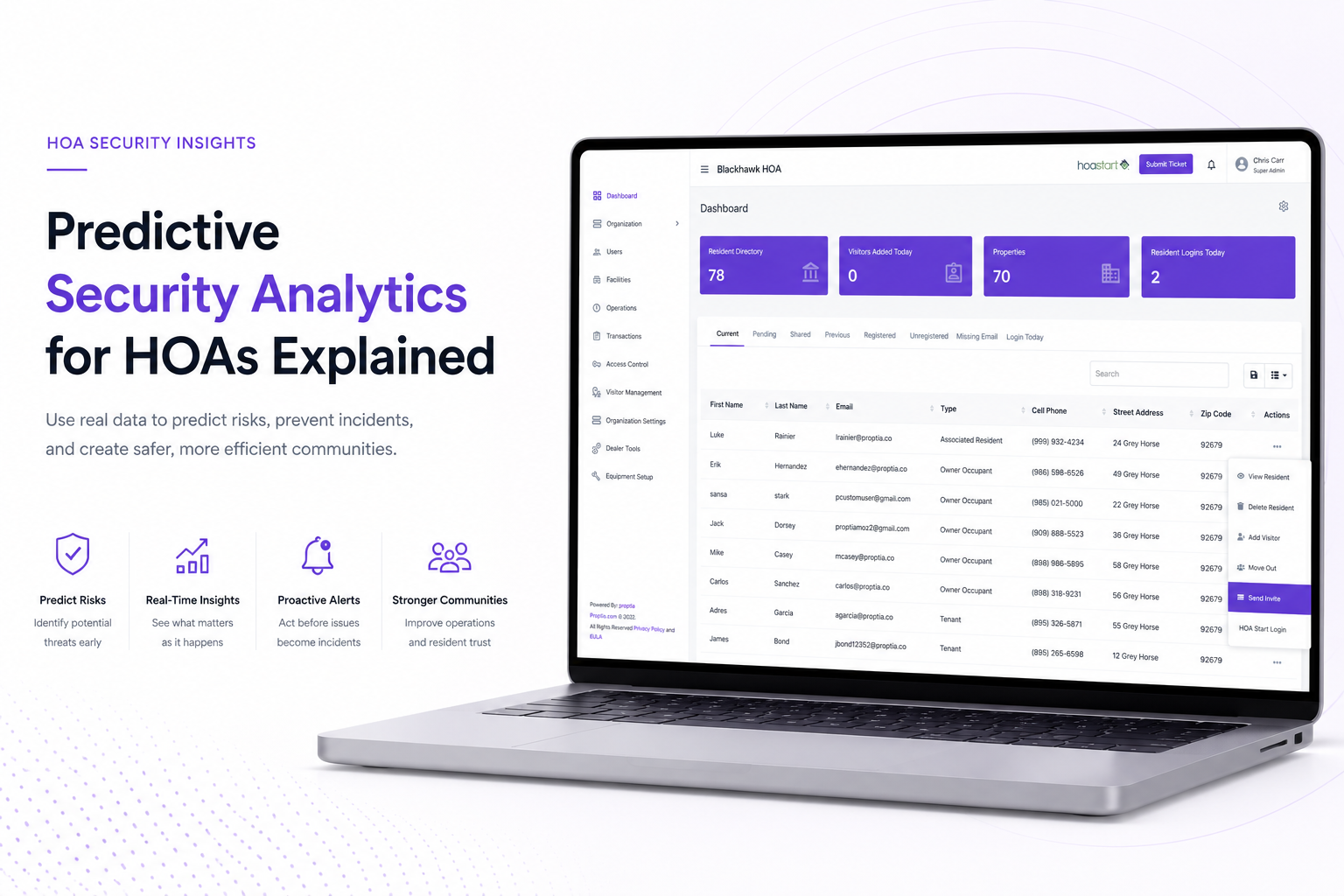
A delivery driver slips through the gate during a busy afternoon, and no one notices until a resident reports a missing package. This type of gap is common in communities that rely only on reactive security. Predictive security analytics for HOAs helps identify risks before they become incidents.
Predictive security analytics for HOAs uses data from gates, visitors, and vehicles to identify patterns and flag potential risks before they happen. It helps communities prevent unauthorized access, reduce bottlenecks, and improve oversight. Instead of reacting to incidents, boards and managers can act early based on real data.
What Is Predictive Security Analytics for HOAs
Predictive security analytics for HOAs is the use of data to anticipate security events rather than just record them. It pulls information from systems like gate logs, visitor check-ins, and license plate recognition.
The goal is simple. Spot unusual behavior early and act before it becomes a problem.
For example, if a vehicle enters the community at unusual hours multiple times, the system can flag it. That alert allows staff to verify access before an issue occurs.
How It Works
Predictive analytics does not replace your current systems. It builds on the data they already generate.
Here is how it typically works:
- Data collection
Systems like HOA access control, visitor logs, and license plate recognition for gated communities capture activity at entry points. - Pattern analysis
The system reviews historical data to identify normal behavior such as peak traffic times or frequent visitors. - Anomaly detection
When something falls outside those patterns, it is flagged. That could be a vehicle entering at odd hours or repeated denied access attempts. - Alerts and insights
Staff receive alerts through dashboards or mobile tools so they can respond quickly. - Continuous learning
The system improves over time as it processes more data and refines what is considered normal.
Modern platforms like Proptia combine these data sources into one interface, making it easier to act on insights without switching between systems.
Why It Matters for HOAs
Predictive analytics is not about adding complexity. It is about making daily operations easier and more consistent.
Here is what it improves:
- Faster decision making
Staff do not need to manually review logs. The system highlights what matters. - Reduced gate congestion
By identifying peak traffic patterns, communities can adjust staffing or entry rules. - Better control over access
Suspicious activity is flagged in real time, not hours later. - Fewer resident complaints
Proactive monitoring reduces missed visitors, delays, and unauthorized access. - Improved accountability
Boards can see clear data on how security operations are performing.
When HOAs Typically Consider This Solution
Most communities do not start with predictive analytics. They adopt it after running into recurring operational issues.
Common triggers include:
- Growth in community size leading to more vehicles and visitors
- Increased deliveries creating congestion at gates
- Repeated security incidents or near misses
- Resident complaints about inconsistent gate operations
- Limited visibility into who is entering and when
At a certain point, manual processes stop keeping up. That is when predictive insights become useful.
Common Operational Challenges HOAs Face
Many communities struggle with the same day-to-day issues.
- Guard inconsistency
Different guards may follow different procedures, leading to uneven enforcement. - Traffic bottlenecks
Peak hours create long lines when systems are slow or manual. - Lack of visibility
Managers often rely on reports after the fact instead of real-time insights. - Missed warning signs
Suspicious patterns are easy to overlook without automated detection. - Resident frustration
Delays and security gaps quickly lead to complaints.
Predictive analytics addresses these issues by making patterns visible and actionable.
What HOAs Should Look for in a System
Not all systems deliver meaningful insights. Some just collect data without helping you use it.
When evaluating predictive security analytics for HOAs, focus on:
- Real-time alerts
You need immediate notifications, not end-of-day reports. - Integration with existing tools
The system should work with your current access control and visitor management setup. - Clear dashboards
Insights should be easy to understand without technical expertise. - Custom rules
Communities should define what counts as unusual activity. - Mobile access
Staff should be able to monitor and respond without being tied to a desk. - Scalable design
The system should handle growth without requiring a full replacement.
Common Mistakes to Avoid
HOAs often run into issues when adopting new security tools.
- Treating analytics as optional
Without actively using the insights, the system becomes just another log. - Ignoring staff training
Even simple systems need clear procedures for responding to alerts. - Overcomplicating setup
Start with a few key alerts and expand over time. - Failing to integrate systems
Disconnected tools limit the value of predictive analytics. - Not defining goals
Know what you want to improve, whether it is traffic flow, security, or resident experience.
How This Fits Into Existing HOA Security Systems
Predictive analytics does not replace your current setup. It enhances it.
Most communities already use some combination of:
- Gatehouse visitor management
- Telephone entry systems
- Mobile credentials
- License plate recognition
- Vehicle alert systems
Predictive analytics connects these systems and applies security intelligence across all of them.
For example, a vehicle flagged in one system can trigger alerts across others. This creates a unified view of activity instead of isolated data points.
Platforms like Proptia are designed to work this way. They can be deployed alongside existing infrastructure or as a complete solution, depending on the community’s needs.
Key Terms Explained
- Predictive analytics
The use of historical and real-time data to forecast future events - Access control
Systems that manage who can enter a property and when - License plate recognition
Technology that identifies vehicles by reading license plates - Security intelligence
Insights generated from analyzing security data - Anomaly detection
Identifying behavior that does not match normal patterns
Conclusion
Predictive security analytics for HOAs shifts security from reactive to proactive. Instead of reviewing incidents after they happen, communities can prevent them.
It improves daily operations by reducing congestion, increasing visibility, and helping staff focus on what matters. The result is a smoother, more consistent experience for both residents and security teams.
A practical next step is to review your current systems and identify where data already exists but is not being used. From there, explore tools that can turn that data into actionable insights, whether through upgrades or platforms that unify your existing setup.
Suggested Internal Links
access control
license plate recognition
security intelligence
vehicle alert systems
FREQUENTLY ASKED QUESTIONS
What problems does predictive security analytics actually solve for HOAs?
Can this help reduce resident complaints about gate operations?
Yes. By improving traffic flow and catching issues early, it reduces delays, missed guests, and inconsistent entry experiences.
Will this make our security team more effective without adding staff?
How quickly can we expect to see value after implementing this?
Can predictive analytics actually help us make better board-level decisions?
Can Proptia work alongside existing HOA security infrastructure?
How is this different from the reports we already get today?
What kind of risks can the system actually detect?
It can flag unusual entry times, repeated denied access attempts, unknown vehicles, and patterns that suggest potential security concerns.
Is this something only large, high-end communities should consider?
No. Any community experiencing traffic, visibility gaps, or operational inefficiencies can benefit from predictive insights.
Does this require replacing our existing access control or gate systems?
No. It typically integrates with your current systems and enhances the data you are already collecting.
What happens if we continue operating without this level of visibility?
Issues remain reactive. Security gaps, inefficiencies, and resident frustration continue without a clear way to identify or fix root causes.
Get in Touch
Interested in learning how predictive security analytics can improve your HOA’s security and daily operations?
Schedule a Demo Now!