

Quick Answer
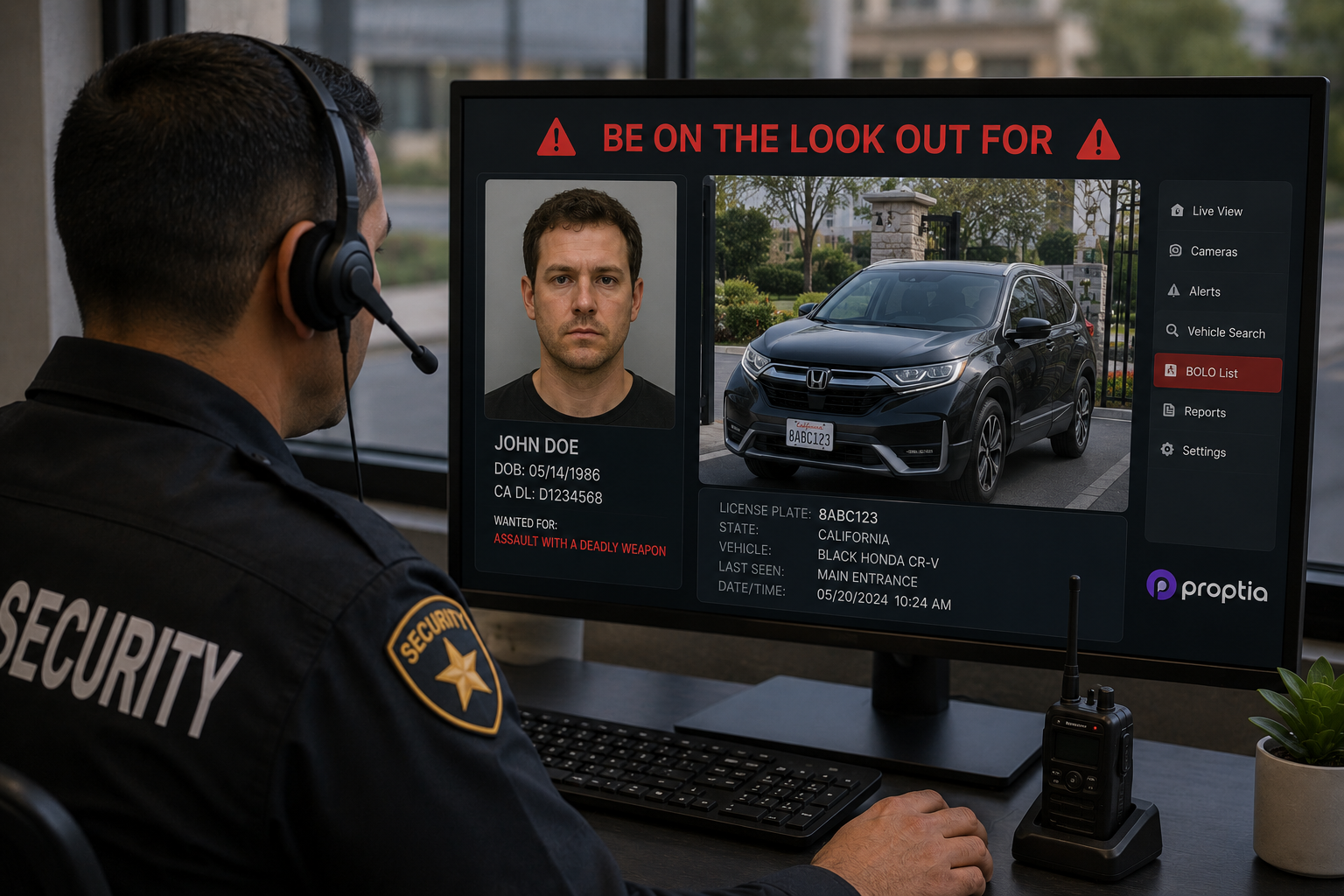
Vehicle BOLO detection software is a system that flags vehicles of interest in real time using license plate recognition and alert rules. It helps HOAs identify, track, and respond to specific vehicles entering or exiting a community.
What’s Actually Happening in HOA Gate Operations
In many gated communities, traffic at the entrance follows predictable but challenging patterns. Mornings bring resident exits, evenings bring returns, and in between you have a steady mix of guests, vendors, and deliveries.
Guards are expected to recognize vehicles, check lists, and make quick decisions. Over time, that process becomes inconsistent. Some vehicles get waved through. Others get delayed without clear reasoning.
Now layer in shared amenities like clubhouses or golf facilities. These draw non-resident traffic, which increases the chance of unfamiliar vehicles showing up throughout the day.
This is where the idea of tracking specific vehicles becomes less of a convenience and more of an operational need.
Where Traditional Approaches Break Down
Most communities rely on a mix of manual logs, printed watch lists, and guard memory. On paper, that sounds manageable. In practice, it breaks under real conditions.
- Printed BOLO lists go out of date quickly
- Guards change shifts and lose context
- Vehicle descriptions are vague or incomplete
- License plates are rarely checked consistently
- There is no automatic alert when a flagged vehicle enters
The result is uneven enforcement. A vehicle that should be flagged might enter without issue during one shift, then get stopped during another.
This inconsistency creates both security gaps and resident frustration. It also makes it difficult to prove what actually happened after the fact.
How Vehicle BOLO Detection Software Operates in Practice
Modern vehicle BOLO detection software works by combining license plate recognition for gated communities with rule-based alerts. It shifts the process from manual observation to automated detection.
Here is how it typically operates day to day:
- Resident access
Vehicles tied to resident profiles move through quickly using registered plates. No BOLO check is needed unless a flag is applied. - Visitor and vendor flow
Plates are captured as they approach the gate. The system checks against active watch lists in real time. - Entry validation
If a plate matches a flagged record, the system alerts the guard instantly. This can trigger instructions such as deny entry, notify management, or log the event. - Activity tracking
Every scan is recorded. Communities can see when and where a flagged vehicle attempted entry.
Instead of relying on memory or static lists, decisions are guided by real-time data.
What Improves Immediately After Implementation
The most noticeable change is consistency at the gate.
When a vehicle on a watch list approaches, the system responds the same way every time. Guards do not need to remember details or interpret vague notes.
Traffic flow also improves. Vehicles that are not flagged move through faster because checks happen automatically in the background.
Other immediate changes include:
- Faster processing of guest and vendor entries
- Fewer manual lookups and radio calls
- Clear documentation of all flagged activity
- Reduced uncertainty for gate staff
The gate becomes less reactive and more controlled.
The Hidden Operational Advantages Most HOAs Miss
Beyond the obvious security benefits, there are operational gains that are easy to overlook.
One is accountability. When every vehicle interaction is logged, it becomes easier to review incidents and verify guard actions. This strengthens overall security intelligence without adding extra steps.
Another is pattern visibility. Over time, communities can see trends. For example, repeated attempts by the same vehicle or unusual visit patterns tied to vendors.
There is also less dependence on individual guard performance. The system standardizes decisions, which reduces variability between shifts.
Finally, integration with broader hoa access control systems means BOLO alerts can tie into other actions, such as restricting amenity access or triggering notifications to management.
How to Think About Vehicle BOLO Detection Software Selection
Choosing a system is less about features and more about operational fit.
Start by thinking about how your gate currently handles exceptions. If your team relies heavily on guards to interpret situations, automation will bring immediate structure.
Then consider how fast your entry points need to operate. High traffic communities benefit from systems that run checks in the background without slowing the line.
It is also worth evaluating how the system fits into your existing setup. Some communities want a full platform, while others prefer to layer BOLO capabilities onto existing vehicle alert systems.
Modern platforms like Proptia are designed to support both approaches. They can operate as a standalone solution or integrate into current infrastructure without forcing a full replacement.
Common Misjudgments That Lead to Poor Decisions
A common mistake is treating BOLO detection as a rarely used feature. In reality, it becomes part of daily operations once implemented.
Another misstep is underestimating how often vehicle data changes. Plates get updated, visitors rotate, and vendors switch vehicles. Static systems cannot keep up with this.
Some communities also assume guards will consistently enforce watch lists without technological support. Experience shows that this leads to uneven outcomes.
Focusing only on upfront cost is another issue. Lower-cost systems often lack real-time detection or reliable plate recognition, which reduces effectiveness.
How This Fits Into an Existing Community Setup
Adopting vehicle BOLO detection software does not require starting from scratch.
Many communities already have some level of license plate recognition or gatehouse processes in place. The key is adding a layer that connects detection to action.
This can be done gradually:
- Start with basic plate capture at entry points
- Add BOLO alerts for specific vehicles
- Expand into broader access control and tracking
Because modern systems are modular, communities can improve targeted areas without disrupting daily operations.
Conclusion
Vehicle BOLO detection software brings structure to a part of gate operations that often relies on memory and manual effort. It replaces inconsistent processes with real-time, repeatable actions.
For HOAs, this means better control without slowing down daily traffic. It also creates a clearer picture of what is happening at each entry point.
As communities grow and traffic becomes more complex, having a system that can identify and respond to specific vehicles is no longer optional. Platforms like Proptia show how this can be done in a way that fits into existing operations while improving overall visibility
FREQUENTLY ASKED QUESTIONS
What does BOLO mean in vehicle detection systems?
Can guards override BOLO alerts?
How are vehicles added to a BOLO list?
Is this only useful for security threats?
How accurate is license plate recognition for this use case?
Does this slow down traffic at the gate?
Can the system track repeat attempts by the same vehicle?
Get in Touch
Interested in learning how Proptia helps HOAs identify flagged vehicles in real time, improve gate consistency, and reduce reliance on manual watch lists and guard memory?
Schedule a Demo Now!