

Quick Read
South Carolina, particularly the Hilton Head area, has one of the highest concentrations of guard gated communities in the United States. Many of these communities, including large plantation-style HOAs, operate highly structured and efficient security environments with multiple entry points, guard gates, and strict access policies.
Unlike standard suburban HOAs, these communities function more like private resorts. They manage a constant mix of residents, guests, vendors, and short-term visitors, often across expansive properties with complex road networks.
Because of this, South Carolina HOAs, especially around Hilton Head, require more advanced and reliable access control systems than most markets. Speed, accuracy, and consistency at the gate are critical, not just for security, but for maintaining the resident experience.
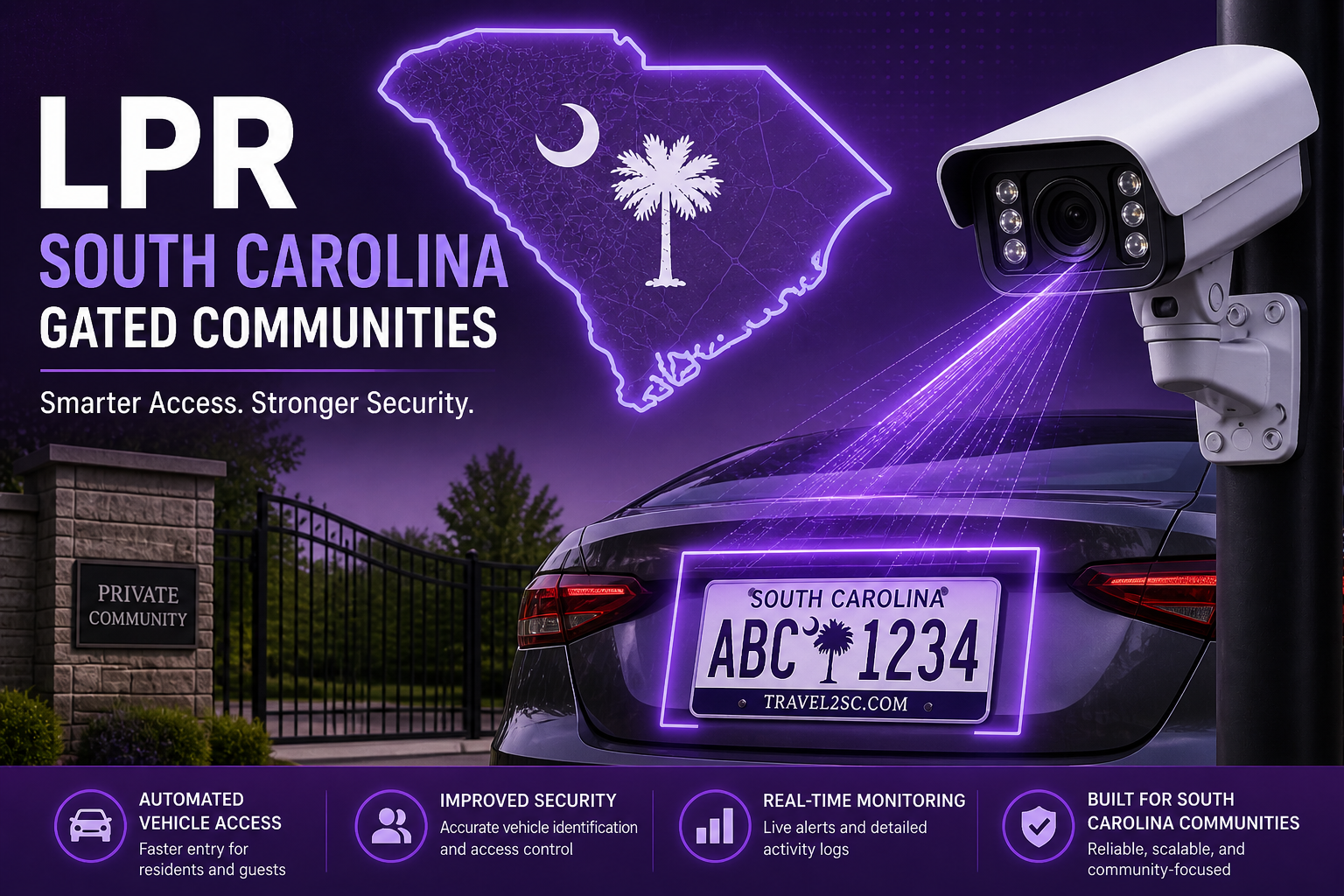
License Plate Recognition (LPR) has become a key technology in these environments. It allows communities to automate vehicle access while maintaining tight control and full visibility across all entry points.
At its core, LPR in South Carolina gated communities is a vehicle-based access control method that:
- Identifies vehicles using license plates
- Automates gate entry for approved users
- Tracks all vehicle activity in real time
In a market where expectations are high and operations are complex, LPR is not just a convenience. It is becoming a standard.
.

What Is LPR in South Carolina Gated Communities?
License Plate Recognition (LPR) in South Carolina gated communities is a vehicle-based access control method that uses cameras to identify and authorize cars entering a property.
Instead of relying on key fobs, transponders, or manual guard checks, LPR systems:
- Capture a vehicle’s license plate
- Match it against an approved database
- Automatically open the gate if authorized
- Log the entry for reporting and security
In communities across South Carolina, especially in areas like Hilton Head and Charleston, LPR is becoming a standard for modern gate access.
How Does It Work?
LPR systems operate as part of a larger HOA security workflow.
Here is the typical process:
1. Plate Enrollment
Residents register their vehicles in the system, linking license plates to their account.
2. Camera Detection
LPR cameras at the gate capture plate images as vehicles approach.
3. Instant Matching
The system compares the plate to a database of approved residents, guests, and vendors.
4. Access Decision
- Match found → gate opens automatically
- No match → routed to guard or denied access
5. Activity Logging
Every entry is recorded with time, plate number, and associated resident.
This entire process happens in seconds, without requiring the driver to stop or interact.
Why It Matters for South Carolina Communities
South Carolina has a high concentration of gated communities, especially in coastal and resort-driven markets.
This creates specific challenges:
- High visitor traffic from short-term guests
- Multiple entry points across large properties
- Frequent vendor and service access
- Seasonal population changes
LPR directly addresses these challenges:
1. Faster Entry at Gates
Vehicles move through gates without stopping, reducing backups during peak hours.
2. Improved Security Accuracy
Every vehicle is logged automatically, eliminating gaps from manual entry.
3. Reduced Guard Workload
Guards focus on exceptions instead of verifying every car.
4. Better Resident Experience
No need for fobs or stickers. The vehicle becomes the credential.
5. Stronger Audit Trail
Boards and managers can review exact vehicle activity at any time.
Key Features to Look For
Not all LPR systems perform equally. These features are critical.
High Accuracy Recognition
The system must read plates reliably in different lighting and weather conditions.
Real-Time Processing
Decisions must happen instantly to avoid slowing traffic.
Integrated Access Control
LPR should connect directly to gates, not operate as a standalone tool.
Visitor and Vendor Support
Temporary plates should be easy to add and manage.
Cloud + Local Processing
Systems should continue working even if internet connectivity drops.
Reporting Tools
Clear logs for entries, denials, and historical activity.
Common Mistakes to Avoid
1. Treating LPR as a Standalone Tool
Many communities install LPR without integrating it into their access control system. This limits its value.
2. Poor Camera Placement
Incorrect angles or lighting conditions reduce accuracy significantly.
3. Not Maintaining Plate Data
Outdated vehicle records lead to access issues and frustration.
4. Ignoring Edge Processing
Cloud-only systems can fail during connectivity issues. Local processing is critical.
5. Overlooking Guest Workflows
LPR should work for guests and vendors, not just residents.
How It Integrates With Existing Systems
LPR systems in South Carolina communities typically integrate with:
- HOA access control systems (gates and entry points)
- Visitor management software (guest and vendor tracking)
- Property management systems (resident data sync)
- Guard gate software (manual overrides and verification)
For example, when a resident adds a guest, their vehicle plate can be pre-authorized. When that vehicle arrives, the system recognizes it and grants access automatically.
This eliminates the need for guard calls and manual verification.
Real-World Example
A coastal South Carolina community with multiple gates struggled with long entry times during weekends and holidays.
After implementing LPR:
- Resident vehicles entered without stopping
- Guest vehicles were pre-authorized with plate-based access
- Guard workload dropped significantly
- Entry throughput increased during peak traffic
The result was faster access, better security tracking, and improved resident satisfaction.
Key Terms
- LPR (License Plate Recognition): Technology that identifies vehicles using camera-captured plate data
- HOA (Homeowners Association): Organization managing a residential community
- Access Control: System that manages entry through gates or doors
- Visitor Management: Software that tracks and approves guests and vendors
- Guard Gate Software: Interface used by guards to manage entry and verify access
- Property Management System: Software used to manage resident and property data
FREQUENTLY ASKED QUESTIONS
What is LPR in gated communities?
How accurate are LPR systems?
Can guests use LPR access?
Is LPR secure for HOAs?
Is LPR better than key fobs or transponders?
Can LPR work without internet?
Does LPR improve gate traffic flow?
Get in Touch
Want to see how Proptia can streamline and improve your vehicle and license plate recognition operations?
Schedule a Demo Now!