

Quick Answer
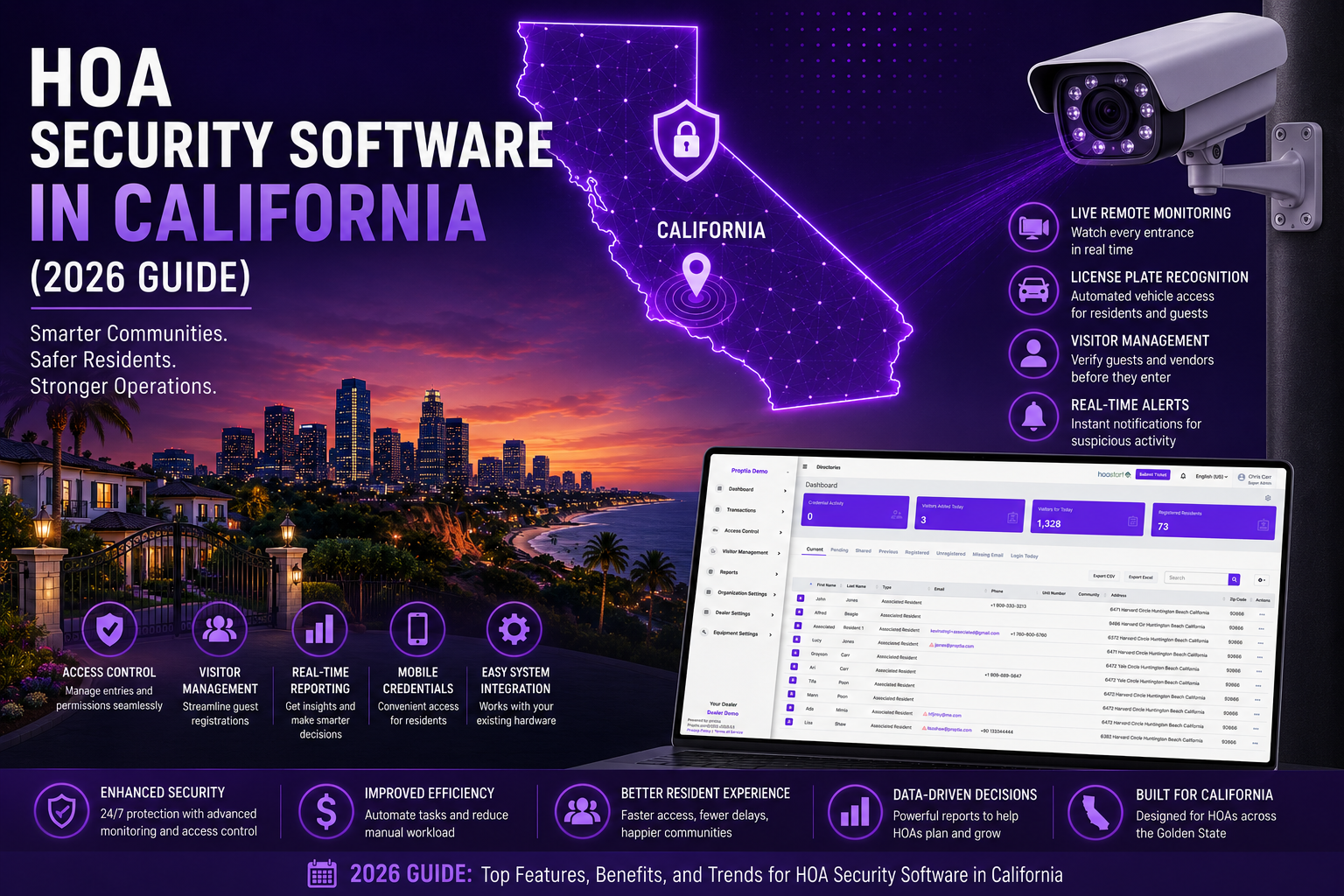
HOA security software in California helps communities manage access, track visitors, and improve safety across gates, buildings, and shared spaces. It connects tools like visitor logs, access control, and license plate recognition into one system. For California HOAs dealing with high traffic, liability concerns, and resident expectations, modern software is quickly becoming essential.
HOA Security Software in California: What You Need to Know
California communities face a unique mix of challenges. Many HOAs manage large populations, multiple entry points, and strict regulatory expectations. From gated neighborhoods in Orange County to high-density developments in the Bay Area, security operations are not simple.
HOA security software in California is designed to centralize and automate these operations. Instead of relying on clipboards, spreadsheets, or disconnected systems, property managers can monitor and control access through a unified platform.
This type of software is not limited to high-end gated communities. Mid-sized HOAs and mixed-use developments are increasingly adopting these tools to reduce manual work and improve response times.
California also tends to lead in technology adoption. Residents expect convenience, such as mobile entry and quick guest access, while boards expect transparency and audit trails. Security software bridges that gap.
How HOA Security Software Works
At its core, HOA security software connects all entry points and visitor activity into one system.
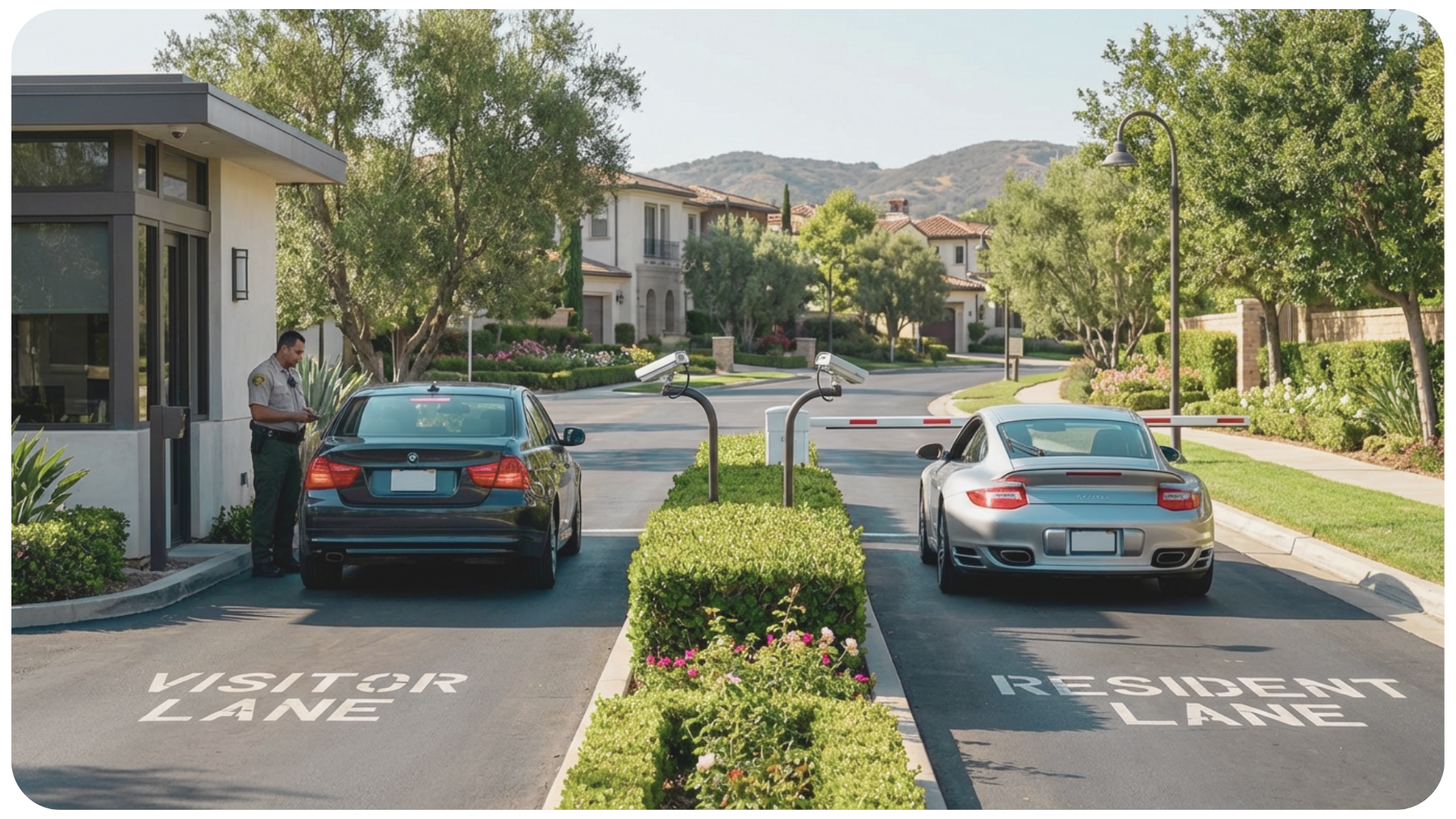
When a visitor arrives, the system can verify them through a guard, kiosk, or pre-approval via a resident. Their entry is logged automatically. If license plate recognition is installed, the system can identify vehicles instantly and trigger gate access without manual input.
Residents can manage their own guest lists through mobile apps or web portals. This reduces calls to the gate and speeds up entry.
Access control is another key component. The software manages who can enter specific areas and when. This includes gates, doors, amenities, and parking areas.
For communities using telephone entry systems, software can modernize the experience by linking directories and call routing to mobile devices instead of outdated hardware.
Everything is tracked. Managers can review logs, generate reports, and monitor activity in real time. This visibility is especially important for large California HOAs that need accountability.
Some platforms, like Proptia, combine visitor management, access control, and license plate recognition into one modular system. Communities can replace one part of their setup or upgrade everything over time.
Why It Matters for HOAs
Security is no longer just about keeping unwanted visitors out. It is about managing daily operations efficiently and reducing risk.
In California, liability is a real concern. If an incident happens and there is no clear record of who entered or exited, it can create legal exposure. HOA security software provides a detailed audit trail.
Staffing is another issue. Labor costs are high across the state. Automating visitor entry and access control reduces the need for constant manual oversight.
Resident expectations are also rising. People want fast entry, easy guest management, and fewer delays at gates. Long lines or slow verification processes lead to complaints.
There is also the issue of scale. Many California communities are large and complex. Managing multiple gates, amenities, and parking areas without centralized software becomes inefficient very quickly.
Finally, security software helps enforce rules consistently. Whether it is controlling vendor access or limiting amenity use, automation removes guesswork and human error.
Key Features to Look For
Not all solutions are built the same. When evaluating HOA security software in California, focus on features that solve real operational problems.
– Visitor management
Look for systems that allow residents to pre-authorize guests and vendors, reducing gate congestion and manual checks.
– License plate recognition (LPR)
LPR improves speed and accuracy by identifying vehicles automatically, which is especially useful in high-traffic communities.
– Access control integration
The software should connect gates, doors, and amenities into one system rather than operating separately.
– Mobile credentials
Residents should be able to open gates or doors using their phone instead of relying only on key fobs or cards.
– Real-time monitoring and reporting
Managers need access to live data and historical logs to track activity and respond to issues.
– Telephone entry modernization
If your community uses telephone entry systems, ensure they can integrate with mobile devices and cloud-based directories.
– Flexible deployment
Choose a system that can work with your existing hardware and expand over time.
– User-friendly interface
Staff and residents should be able to use the system without extensive training.
Common Mistakes to Avoid
Many HOAs invest in technology but fail to get the full benefit. Here are common issues to watch for.
One mistake is choosing a system that does not integrate with existing infrastructure. This leads to fragmented operations and duplicate work.
Another is focusing only on upfront cost. Cheaper systems often lack automation, which increases long-term operational expenses.
Some communities overlook the importance of visitor entry systems. Without efficient visitor processing, even advanced access control systems can create bottlenecks.
Ignoring resident experience is also a problem. If the system is inconvenient, residents will bypass it or complain frequently.
Overcomplicating the setup is another risk. A system should simplify operations, not introduce unnecessary steps.
Finally, failing to train staff and communicate changes to residents can limit adoption. Even the best system will not perform well if people do not use it properly.
How It Integrates With Existing Systems
Most California HOAs already have some level of security in place. The goal is not always to start from scratch, but to improve what is already there.
Modern HOA security software can integrate with:
– Existing gate hardware
Motorized gates and barriers can be connected to software for automated control.
– Access control systems
Key fob or card systems can be upgraded or managed through a centralized platform.
– Cameras and surveillance
Video feeds can be linked to entry logs for better incident tracking.
– Telephone entry systems
Older directories and call boxes can be enhanced with cloud-based management.
– Visitor management workflows
Manual processes can be digitized using visitor management software for HOAs, reducing paperwork and errors.
For example, a community might keep its existing gates but add license plate recognition and a digital visitor system. This approach reduces cost while improving functionality.
Platforms like Proptia are designed with this flexibility in mind. They allow HOAs to upgrade specific components without disrupting the entire system.
Key Terms Explained
– Access control
A system that determines who can enter specific areas and when.
– License plate recognition (LPR)
Technology that automatically reads vehicle license plates to grant or deny access.
– Visitor management
A process for tracking and approving guests, vendors, and deliveries entering the community.
– Mobile credentials
Digital passes on a smartphone that allow residents to open gates or doors.
– Telephone entry system
A device at the entrance that allows visitors to call residents for access approval.
– Audit trail
A record of all entries, exits, and actions within the system.
– Gatehouse automation
Using software to reduce manual work performed by security guards.
Suggested Internal Links
visitor management
telephone entry systems
visitor entry systems
importance of access control
FREQUENTLY ASKED QUESTIONS
What is HOA security software used for?
Can it work with existing gate systems?
Is it expensive to implement?
What is the biggest benefit for property managers?
Is HOA security software necessary in California?
How does license plate recognition help HOAs?
Do residents need to learn new technology?
Get in Touch
Interested in how Proptia can improve security operations in your California community?
Schedule a Demo Now!