

Quick Answer
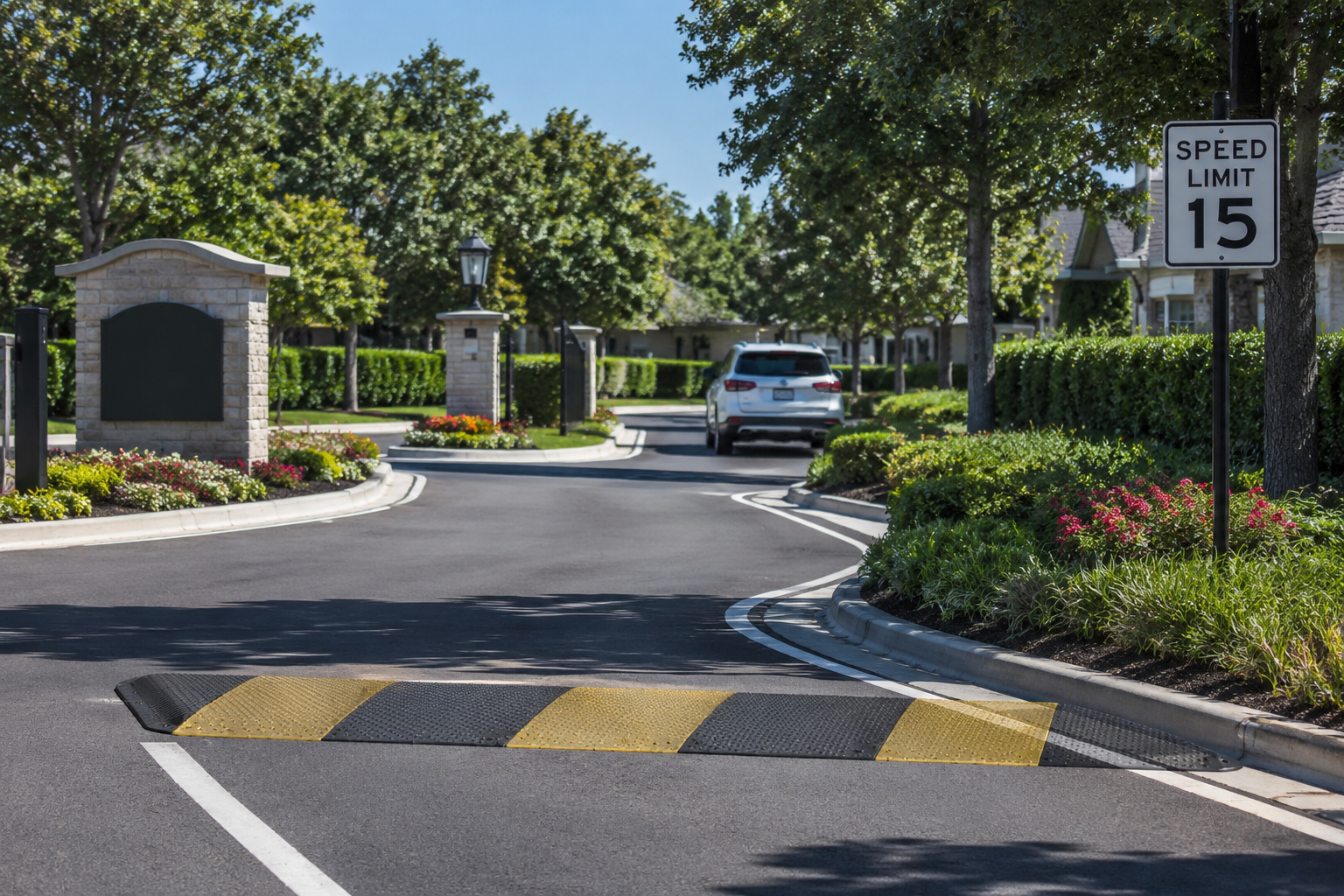
HOA traffic calming devices are physical or visual tools used to slow vehicles and improve safety within residential communities. They include speed bumps, signage, lane narrowing, and similar measures. These devices help reduce speeding, prevent accidents, and improve overall traffic flow in neighborhoods.
What Are HOA Traffic Calming Devices
HOA traffic calming devices are designed to control how vehicles move through a community. They guide driver behavior without constant enforcement from guards or law enforcement.
Most HOAs use a mix of physical features and visual cues. The goal is to slow vehicles down while keeping traffic moving smoothly.
Common Examples
- Speed bumps and speed humps
- Stop signs and yield signs
- Chicanes or lane shifts
- Raised crosswalks
- Road markings and striping
- Traffic circles
- Entry and exit lane design changes
These tools are especially useful in communities with high foot traffic, children, or narrow streets.
How It Works
Traffic calming devices work by changing how drivers perceive and interact with the road. Instead of relying on rules alone, they create physical or visual conditions that encourage safer driving.
Typical Implementation Process
1. Identify Problem Areas
HOAs review speeding complaints, accident reports, and traffic patterns.
2. Select Appropriate Devices
Different roads require different solutions. A main entrance may use signage and lane design, while residential streets rely on speed humps.
3. Install and Test
Devices are installed in key locations and monitored for impact.
4. Adjust as Needed
HOAs often fine-tune placement or add additional measures based on real-world results.
Some communities pair physical measures with tools like vehicle monitoring or license plate recognition for gated communities to track patterns and enforce compliance.
Why It Matters for HOAs
Traffic issues create daily friction in a community. Left unaddressed, they lead to complaints, safety risks, and inefficient operations.
HOA traffic calming devices address these problems in practical ways:
Reduced Speeding
Physical slowdowns make it harder for drivers to ignore posted limits.
Fewer Accidents
Lower speeds directly reduce both the frequency and severity of incidents.
Improved Traffic Flow
Well-placed devices prevent stop-and-go congestion and confusion at intersections.
Less Reliance on Enforcement
Guards and staff spend less time dealing with speed complaints or disputes.
Better Resident Satisfaction
Safer streets lead to fewer complaints and a stronger sense of community control.
When combined with broader traffic flow improvements, these devices help create a more predictable and manageable environment.
When HOAs Typically Consider This Solution
Most communities do not install traffic calming devices proactively. They act after patterns and problems become clear.
Common Triggers
- Growth in the number of residents or vehicles
- Increased delivery traffic from online shopping
- Complaints about speeding or unsafe driving
- Near misses involving pedestrians or children
- Repeated congestion at gates or intersections
- Security concerns tied to uncontrolled vehicle movement
In gated communities, traffic calming often becomes part of a larger discussion about HOA access control and how vehicles move from entry points to residential streets.
Common Operational Challenges HOAs Face
Even well-managed communities run into traffic-related issues. These problems are often operational, not just behavioral.
Common Challenges
Inconsistent Enforcement
Guards may not stop every speeder, leading to uneven expectations.
Bottlenecks at Entry Points
Poor lane design can cause backups during peak hours.
Resident Pushback
Some homeowners resist speed bumps due to noise or vehicle impact.
Lack of Visibility
HOAs often lack data on who is speeding or when issues occur.
Poor Placement of Devices
Incorrect spacing or location reduces effectiveness and frustrates drivers.
Without a coordinated approach, these issues tend to persist even after new devices are added.
What HOAs Should Look for in a System
Choosing HOA traffic calming devices should be a practical decision, not just a quick fix. The goal is to improve operations, not create new problems.
Key Evaluation Criteria
Fit for Road Type
Main roads, side streets, and entrances require different treatments.
Impact on Emergency Vehicles
Devices should not delay fire trucks or ambulances.
Resident Experience
Solutions should balance safety with comfort and convenience.
Ease of Maintenance
Some devices require ongoing upkeep or replacement.
Integration With Monitoring Tools
Data from vehicle monitoring or cameras can help validate effectiveness.
Scalability
The solution should adapt as the community grows or traffic patterns change.
HOAs that take a system-level view tend to see better long-term results.
Common Mistakes to Avoid
Traffic calming efforts can fail when they are rushed or poorly planned.
Mistakes to Watch For
Overusing Speed Bumps
Too many bumps create frustration and slow emergency response times.
Ignoring Data
Decisions based only on complaints can miss the bigger picture.
Poor Communication With Residents
Lack of transparency often leads to resistance.
One-Size-Fits-All Solutions
Not every street needs the same treatment.
Skipping Follow-Up
Without tracking results, HOAs cannot measure success or adjust.
A balanced approach is more effective than aggressive or reactive changes.
How This Fits Into Existing HOA Security Systems
Traffic calming devices do not operate in isolation. They work best when combined with broader security and access strategies.
Example Integration Points
- Entry systems control who gets into the community
- Traffic calming devices control how they move once inside
- License plate recognition for gated communities can track repeat offenders or monitor patterns
- Visitor management tools help reduce congestion at gates
Modern platforms like Proptia bring these elements together. A community can manage visitor entry, monitor traffic activity, and apply operational insights without replacing existing infrastructure.
The result is a more coordinated approach to both safety and efficiency.
Key Terms Explained
Speed Hump
A raised section of road designed to slow vehicles without stopping them completely.
Chicane
A series of curves that force drivers to reduce speed.
Traffic Circle
A small circular intersection that keeps vehicles moving while slowing them down.
Raised Crosswalk
An elevated pedestrian crossing that doubles as a speed control device.
Vehicle Monitoring
The use of cameras or sensors to track traffic patterns and behavior.
Traffic Flow Improvements
Adjustments that make vehicle movement smoother and more predictable.
Conclusion
HOA traffic calming devices play a critical role in keeping residential communities safe and manageable. They reduce speeding, improve flow, and limit the need for constant enforcement.
The most effective approach combines physical design with data and visibility. Communities that align traffic calming with access control and monitoring tools see better outcomes.
A practical next step is to review current traffic patterns, identify problem areas, and evaluate where simple changes could have the biggest impact. From there, consider how those changes connect with your broader security setup.
Suggested Internal Links
access control
license plate recognition
traffic flow improvements
vehicle monitoring
FREQUENTLY ASKED QUESTIONS
What is the most effective traffic calming device for HOAs?
Are residents usually opposed to speed bumps?
How do you measure success after installation?
Should traffic calming be combined with security systems?
Do traffic calming devices damage vehicles?
Can traffic calming reduce liability for HOAs?
Do these devices affect emergency response times?
How Often Should HOAs Review Their Traffic Strategy?
Get in Touch
Interested in learning more on how Proptia can improve traffic safety in your community?
Schedule a Demo Now!