

Quick Answer
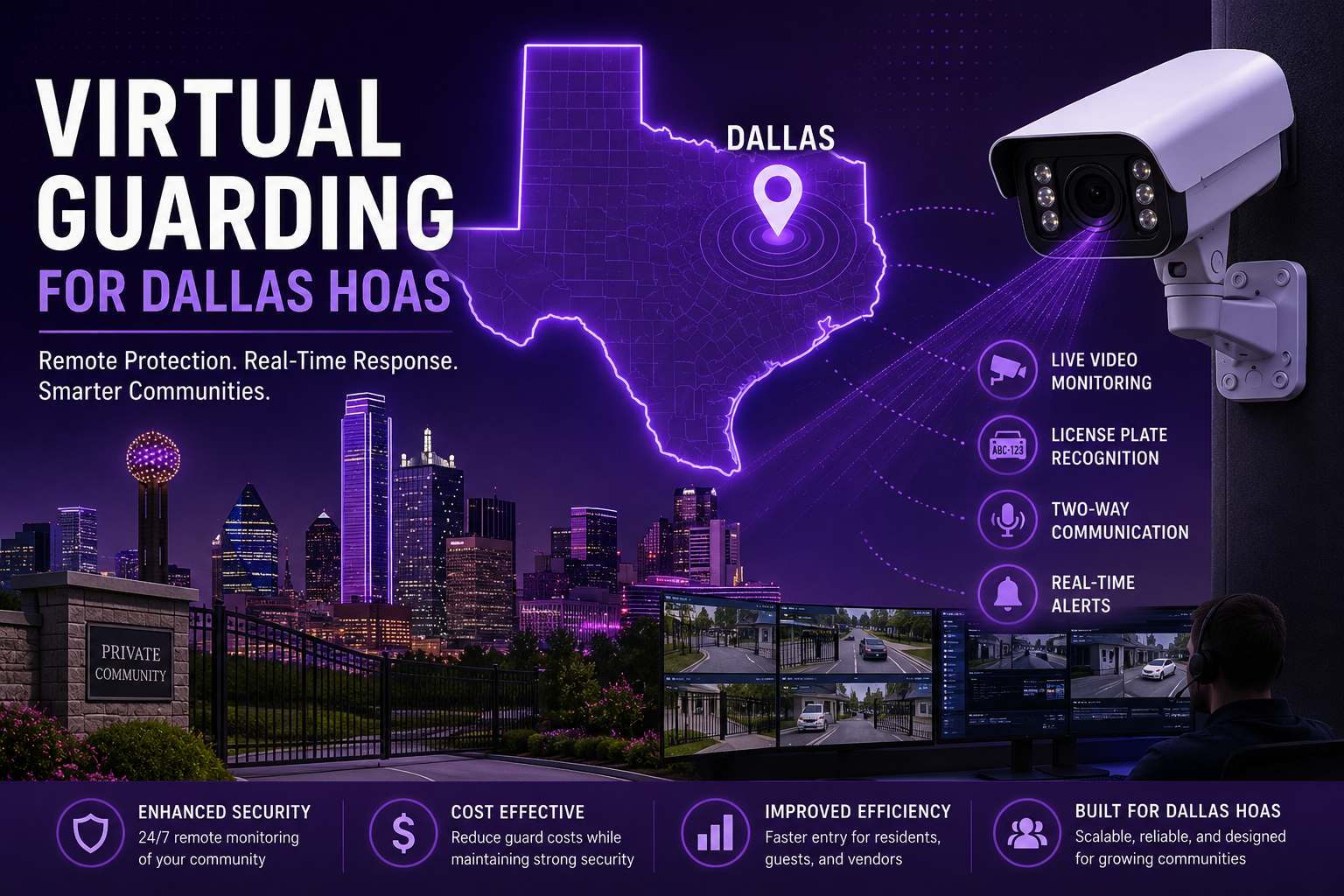
Virtual guarding for Dallas HOAs uses cameras, remote monitoring, and real-time communication to protect gated communities without relying solely on on-site guards. It allows security teams to watch entrances, verify visitors, and respond to incidents from a central location. In a fast-growing metro like Dallas, this approach helps HOAs manage traffic, reduce costs, and maintain consistent security coverage.
Virtual Guarding in Dallas: What You Need to Know
Dallas-area HOAs face a unique mix of challenges. Population growth, high traffic volumes, and a mix of urban and suburban layouts make it harder to control who enters a community. Traditional guard-based systems can struggle with staffing shortages, inconsistent performance, and rising labor costs.
Virtual guarding offers a different approach. Instead of relying only on a person at the gate, HOAs use connected systems that allow trained operators to monitor multiple communities remotely. These operators can see live video, verify visitors, and respond immediately when something looks off.
This model works especially well in Dallas because many communities have multiple access points, high delivery volume, and frequent guest traffic. A virtual system keeps operations consistent across all entry points without needing to staff each one physically.
How Virtual Guarding Works in HOA Communities
Virtual guarding combines several technologies into one coordinated system. Each component plays a role in managing access and monitoring activity.
At the gate, cameras and license plate recognition systems track every vehicle entering and exiting. When a visitor arrives, they can check in through a call box, mobile app, or visitor kiosk. Remote operators then verify the visitor using resident-approved lists or live communication.
If something unusual happens, like a denied entry attempt or suspicious behavior, operators can intervene immediately. They might speak through a speaker system, deny access, or escalate the situation to local authorities if needed.
Behind the scenes, the system logs all activity. HOA managers can review entry records, track patterns, and identify potential security risks. This is where security intelligence becomes valuable, helping communities move from reactive to proactive security.
Many platforms, including solutions like Proptia, combine these tools into a single interface so operators and managers can manage everything in one place.
Why Virtual Guarding Matters for HOAs
For Dallas HOAs, security is not just about preventing crime. It is about managing daily operations smoothly while maintaining a strong sense of control.
Virtual guarding solves several common problems:
First, it improves consistency. Human guards vary in performance, especially across long shifts or overnight hours. A virtual system follows the same process every time, reducing errors.
Second, it reduces costs. Staffing gates 24/7 can be expensive. Virtual guarding allows HOAs to cover multiple entrances with fewer personnel.
Third, it improves response times. Remote operators can monitor several cameras at once and act quickly when something happens.
Fourth, it supports growing communities. As neighborhoods expand, adding more physical guards becomes less practical. Virtual systems scale more easily.
Finally, it improves resident experience. Faster entry for approved guests and fewer delays at the gate make daily life more convenient.
Key Features to Look For:
Not all virtual guarding systems are the same. HOAs should focus on features that directly impact operations and reliability.
Real-time remote monitoring is essential: Operators should be able to see live video and respond instantly.
Integrated visitor management is another must: A system that works with visitor management software for HOAs helps streamline guest approvals and reduces gate congestion.
License plate recognition adds another layer of automation: It allows residents and approved vehicles to enter without stopping.
Mobile credentials: give residents the option to use smartphones instead of key fobs or cards.
Reliable communication tools matter: Two-way audio and video allow operators to interact with visitors clearly.
Vehicle alert systems help flag suspicious or unauthorized vehicles based on predefined rules.
Reporting and analytics should not be overlooked: Access logs and activity reports give HOA boards better visibility into how the system performs.
Finally, flexibility is key: A system should work with existing infrastructure, not force a full replacement unless needed.
Common Mistakes to Avoid
Some HOAs adopt virtual guarding without fully planning how it will work day to day. That usually leads to frustration.
One common mistake is underestimating resident communication. Residents need to understand how visitor approvals work and what to expect at the gate.
Another issue is relying on outdated hardware. Cameras, call boxes, and network connections must be reliable for the system to function properly.
Some communities also fail to define clear protocols. Remote operators need specific instructions on when to grant access, deny entry, or escalate issues.
Ignoring integration is another pitfall. Virtual guarding works best when connected with existing hoa access control systems rather than operating separately.
Finally, focusing only on cost can backfire. A cheaper system that lacks key features often creates more problems than it solves.
How It Integrates With Existing Systems
Most Dallas HOAs already have some level of security infrastructure in place. Virtual guarding does not require starting from scratch.
Existing gates, cameras, and access control systems can often be integrated into a unified platform. For example, license plate recognition cameras can feed data directly into a central system that also manages visitor approvals.
Telephone entry systems can be upgraded to support video and remote verification while keeping familiar workflows for residents.
Visitor kiosks can be added at high-traffic entrances to reduce bottlenecks. These kiosks connect to remote operators who handle verification in real time.
Platforms like Proptia are designed to bring these pieces together. They allow HOAs to enhance specific components, such as visitor management or access control, without replacing everything at once.
This modular approach makes it easier for communities to transition gradually while maintaining daily operations.
Key Terms Explained
– Virtual guarding: Remote monitoring and management of property security using cameras and communication tools
– License plate recognition: Technology that reads vehicle plates to automate entry and tracking
– Remote operator: A trained security professional who monitors and controls access from off-site
– Access control: Systems that manage who can enter or exit a community
– Visitor management: Processes and tools used to track and approve guest access
– Mobile credentials: Smartphone-based access that replaces physical key fobs or cards
– Security intelligence: Data insights that help identify patterns and improve security decisions
Suggested Internal Links
access control
visitor management
security intelligence
vehicle alert systems